WORKPLACE CULTURE CONSULTING
Grounded in human-first principles
|
Care is normalized
|
Boundaries are respected
|
Humanity is centered
|
Grounded in human-first principles | Care is normalized | Boundaries are respected | Humanity is centered |
What does a human-first work culture mean?
A human-first work culture recognizes that our humanity is not separate from our work—it is essential to it. Who we are, how we live, and what we carry outside of work are not inconveniences; they are meaningful parts of our contribution.
In a human-first workplace, people are seen, heard, believed, and valued. Their needs are not minimized or ignored, but honored as worthy of care. In this model, we actively reject grind culture, where bodies are seen as a tool of labor and production.
This system asks us to reimagine work as a place where:
Care is normalized
Boundaries are respected
Well-being is prioritized
Humanity is centered
A human-first work culture is not a trend—it is a commitment to transforming how we work, lead, and relate to one another.
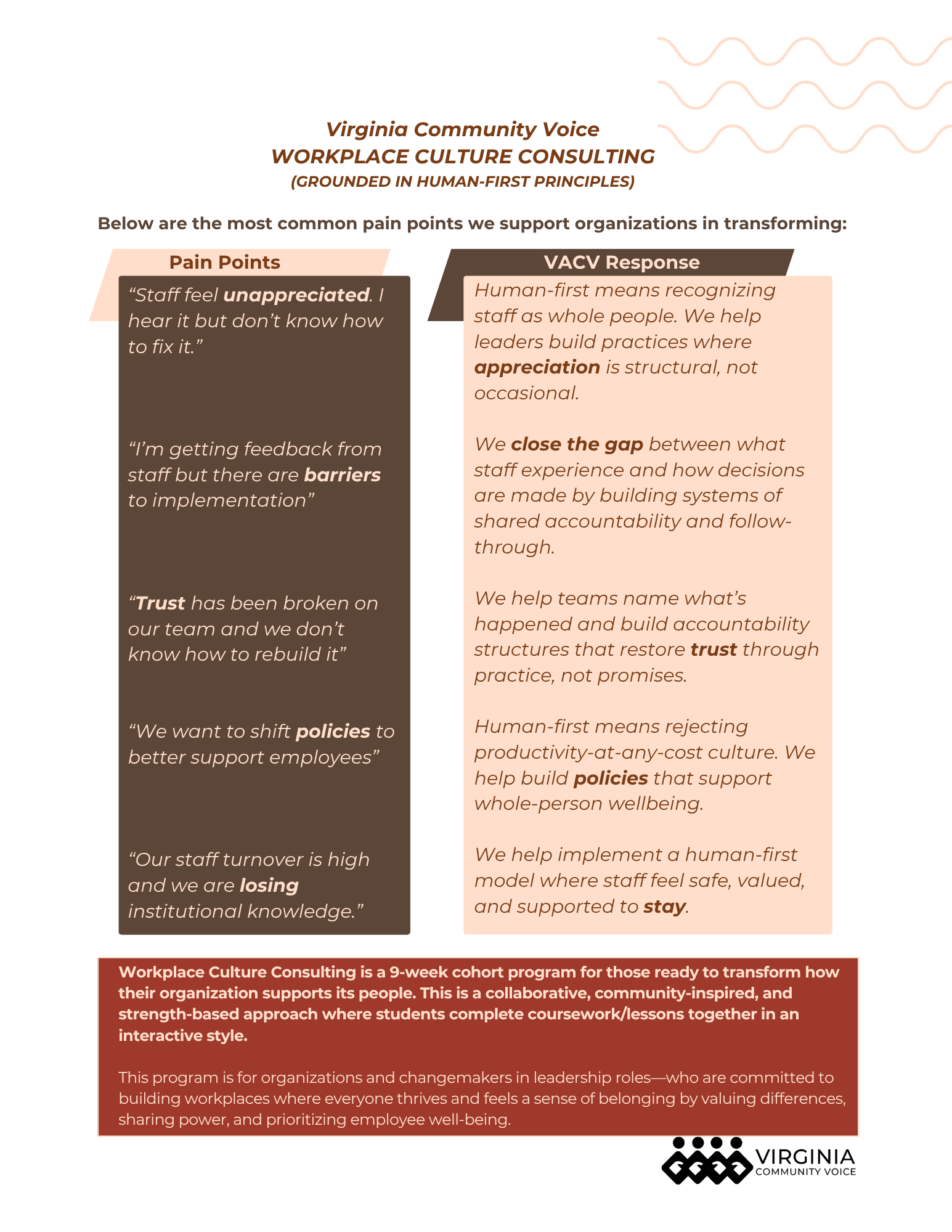
Below are the most common pain points we support organizations in transforming:
Why Work With VACV?
Grounded in Real Practice
We don’t just advise—we practice. Our team operates within a human-first culture rooted in transparency, shared power, and accountability. This shapes how we work, lead, and show up with clients and partners.
Aligned Purpose
When people feel supported and understand their value within the organization, productivity becomes sustainable. We help align systems, values, and daily work so teams move with clarity and purpose—not pressure.
expected Outcomes
Organizations that implement a human-first work culture report:
Increased Productivity
Improved program outcomes
Increased client satisfaction
Long term employee Retention
Lower turnover costs from reduced hiring, onboarding, and retraining
Stronger employee retention and institutional knowledge
Reduced burnout/ stress
Increased creativity, motivation and innovation
Stronger collaboration across teams