4 Strategies We Use to Engage Young People Across Cultures
Written by : Virginia Mejia and Shakirah Jones
Young people are not just our future—they are already shaping our communities. They are artists, advocates, healers, and leaders in the making. They are shaping culture, organizing their communities, and navigating systems that were not built with them in mind. And yet, too often, youth programming asks them to show up, sit quietly, and fit into structures designed by adults.
At Virginia Community Voice, youth engagement isn’t an add-on—it’s essential. And engaging young people across cultures is core to how we build belonging and shared power.
What does meaningful cross-cultural youth engagement actually look like in practice?
This issue highlights four strategies we use, drawn from the experience of our team—including Community Engagement Coordinator Virginia Mejia and Youth Programs Coordinator Shakirah Jones—and grounded in our work through RVA Thrives.
Our ARCA program (Art, Reconciliation, and Civic Advocacy) brings together Black and Latino youth from across Richmond’s Southside. Over time, we’ve learned there is no single formula for engagement—but there are intentional practices that consistently build trust, connection, and leadership.
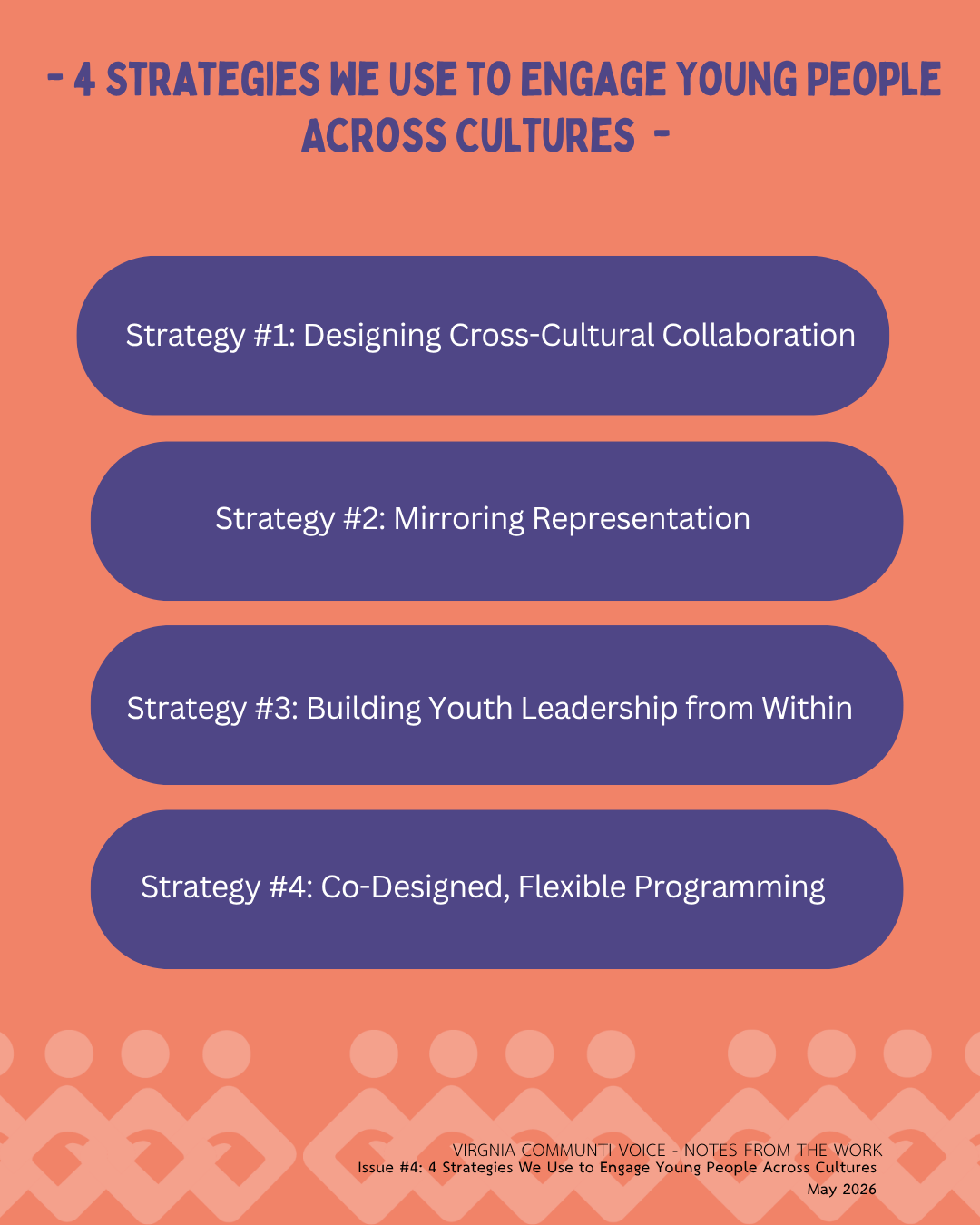
Strategy #1: Designing Cross-Cultural Collaboration
In ARCA, collaboration doesn’t happen by chance—it’s designed.
We start with the community. In the neighborhoods where ARCA takes place, the majority of residents are Black and Latino. Understanding who is in the community shapes how we design the program—ensuring it reflects the voices and experiences of the young people we aim to engage.
Many youth come in already connected—through school, family, or shared spaces—and are drawn to ARCA through a shared interest in art. That common ground matters. It creates an entry point for connection.
At the same time, we recognize that people naturally gravitate toward what feels familiar. So we are intentional about creating opportunities for youth to move beyond those initial comfort zones—while still honoring them.
Through a mix of organic interaction and thoughtful facilitation, youth begin to build relationships across differences. Over time, they shift from a group of individuals into a connected community.
Through art, community projects, and collective problem-solving, they learn how to navigate differences, build trust, and create together.
Strategy #2: Mirroring Representation
Young people engage more deeply when they see themselves reflected in the space.
In ARCA, our staff reflect the communities we serve—and that matters.
Shakirah joined the team at 21. As a young Black woman from the same community, she brings lived experience from youth programs that didn’t always center her voice. That experience shapes how she shows up now—creating space for youth to be heard, valued, and taken seriously.
Virginia brings another layer. Originally from the Dominican Republic, her bilingual ability allows her to communicate directly with families who are more comfortable speaking Spanish. That access matters—it builds trust and ensures families are part of the experience, not on the margins.
We prioritize language access, cultural relevance, and environments where young people feel safe, seen, and respected.
This isn’t just about inclusion—it’s about shifting who holds voice and influence in the space.
Strategy #3: Building Youth Leadership from Within
We don’t wait for youth to become leaders—we start by recognizing that they already are.
Many ARCA participants return year after year, and we intentionally build on the strengths they bring with them. Due to the growing popularity and capacity of the program, opportunities for new participants can sometimes be limited—reflecting both strong retention and sustained engagement over time. Within the program, youth are given real opportunities to facilitate, guide discussions, and support their peers—not as a symbolic gesture, but as a core part of how ARCA operates.
Over time, this creates pathways for deeper leadership.
Jay, a longtime ARCA participant and current Steering Committee member, is one example. Since joining ARCA in 2021, Jay has consistently shown a willingness to speak up, ask thoughtful questions, and build relationships across difference. We recognized
those strengths early and made space for him to lead within sessions—supporting his growth over time. Today, he plays an active role in shaping conversations in the Steering Committee, helping ensure youth voice is not just included, but influential.
Guillermo offers another example. Since joining ARCA in 2022, he has been a steady and creative presence among his peers. After his first year, he independently organized a group of students to create an art project inspired by their ARCA experience—extending the work beyond the program itself. His leadership shows up through initiative, creativity, and a commitment to bringing others along.
This leadership development is also reflected in broader community impact. Since 2022, ARCA youth have contributed to public art projects in the forthcoming Broad Rock Creek Park, including designs for benches, tables, panels, and a rock garden. Through a series of facilitated sessions with the City of Richmond, youth shared ideas about what they wanted the park to reflect and the messages they wanted visitors to experience. Those visions were then brought to life through their artwork across the park.
These leadership skills are not exceptions—they are what becomes possible when young people are trusted, supported, and given space to lead.
Strategy #4: Co-Designed, Flexible Programming
Youth engagement is strongest when young people help shape the experience.
We regularly gather feedback from participants and use it to adapt the program in real time. We respond to what youth tell us—and make changes that reflect their needs.
This approach shifts power, positioning youth not just as participants, but as co-designers. The result is programming that is more responsive, relevant, and grounded in their experience.
Over the years, youth feedback has led to tangible changes in ARCA—from shifting the program from summer to fall, to adjusting session times, to rethinking what’s provided during sessions. These decisions may seem small, but they reflect something larger: a commitment to listening, responding, and building with young people—not for them.

Reflection
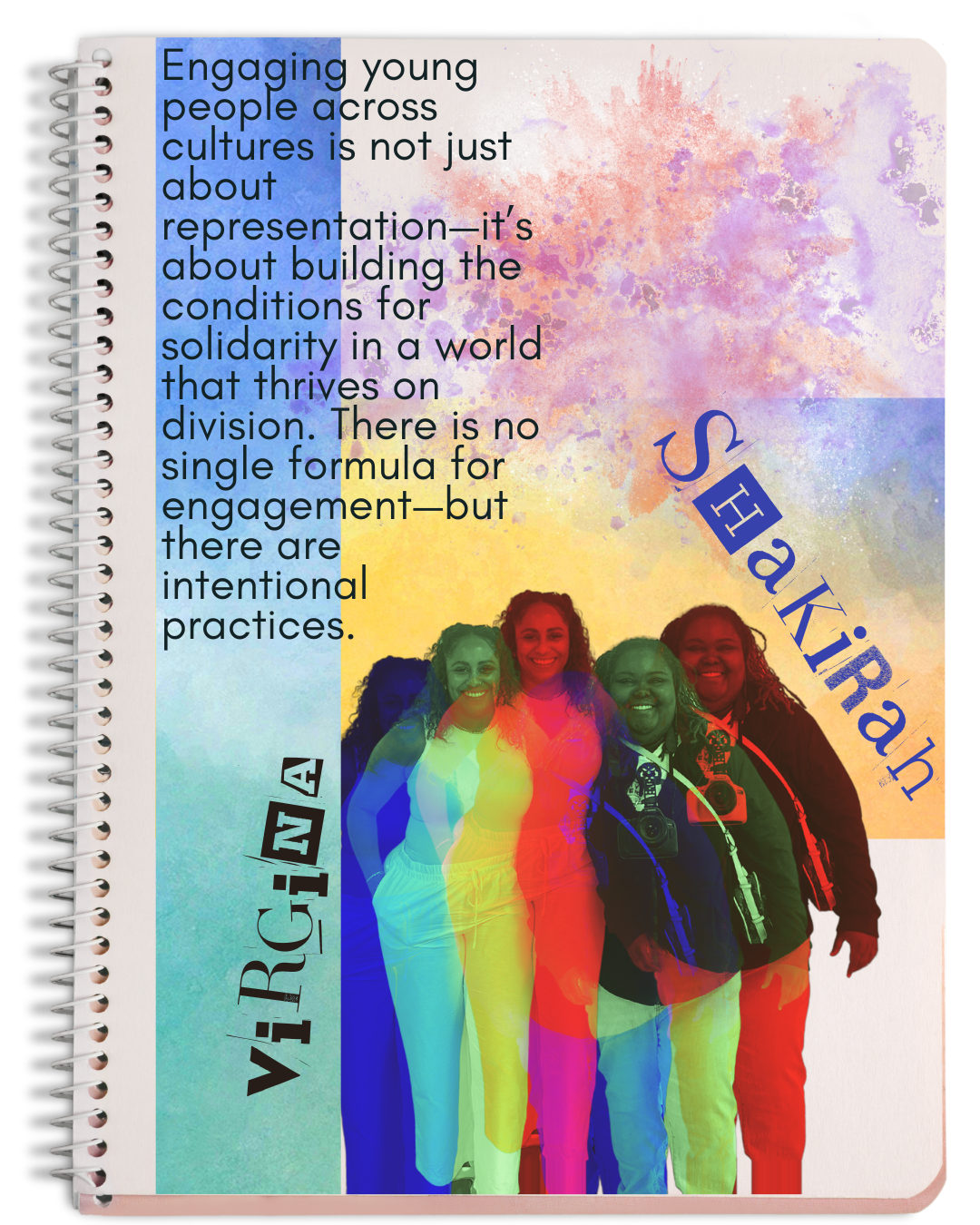
Engaging young people across cultures is not just about representation—it’s about building the conditions for solidarity in a world that thrives on division. Relationships rooted in trust, respect, and intercultural connection are what make a program rich—not materially, but in the strength of shared understanding.
When we create the conditions for belonging and shared power, young people don’t just participate— they shape what becomes possible for all of us.
Reflection Questions?
What challenges have you faced when trying to engage youth across cultures, and what strategies have helped you overcome those barriers?
How do you create an environment where young people feel safe, respected, and empowered to express their identities, experiences, and perspectives?
The article emphasizes that youth are already leaders. How does your program identify and nurture the strengths that young people already bring into the space?